Are you curious to know more about cross country skiing on wheels – namely roller skiing. Learn how the sport works, what techniques to use, and why it’s a powerful full-body workout. We’ll also cover practical rollerski tips to help you train smarter and stay safe.
There’s an old saying: “Good skiers are made during the summer” – and it holds true. You can’t expect to stay in shape for cross-country skiing in winter if you don’t break a sweat during spring, summer, and fall.
Overview

Overview
What Is Roller Skiing?
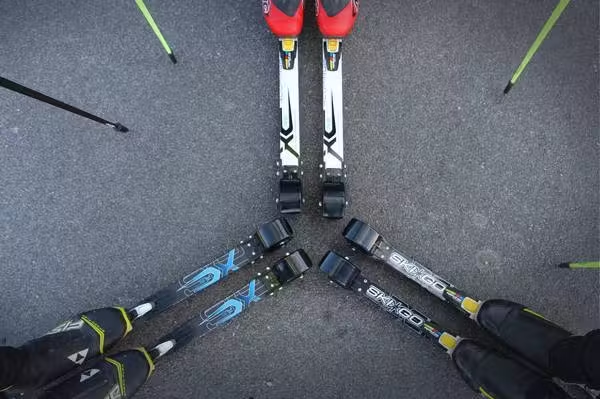
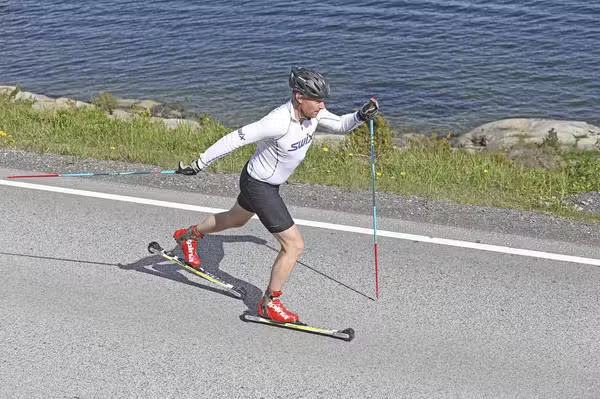
Roller skiing is a summer alternative to cross country skiing, and rather than snow, it involves wheels. Athletes use roller skis, poles, and skiing techniques to simulate skiing. The sport allows you to train year-round and stay in top shape even when there’s no snow. It’s often described as cross country without snow, and for good reason – the movement and muscle activation are nearly identical.
Roller Skiing Is the Ideal Cross Country Training During the Off Season
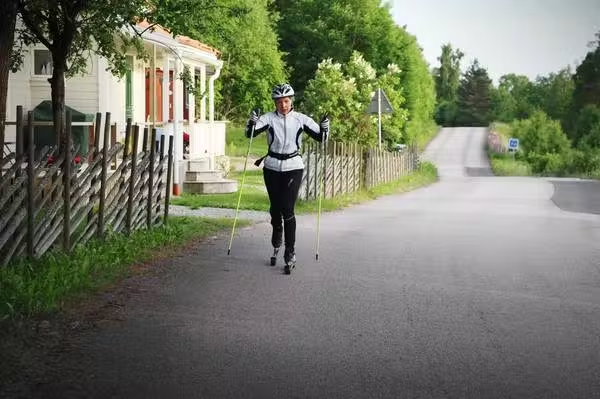
One of the biggest advantages of roller skiing is that it allows athletes to maintain consistent cross country training throughout the entire year. When the snow melts, roller skiing becomes an essential tool for training for cross country during the off season. It closely replicates the technique, movement, and intensity of skiing on snow – engaging the same muscle groups and cardiovascular systems.
For both recreational skiers and elite racers, roller skiing ensures that technique, fitness, and coordination are not lost during the warmer months. It’s the most effective way to bridge the seasonal gap and keep your cross country training on track year-round.
How Hard Is It To Roller Ski?
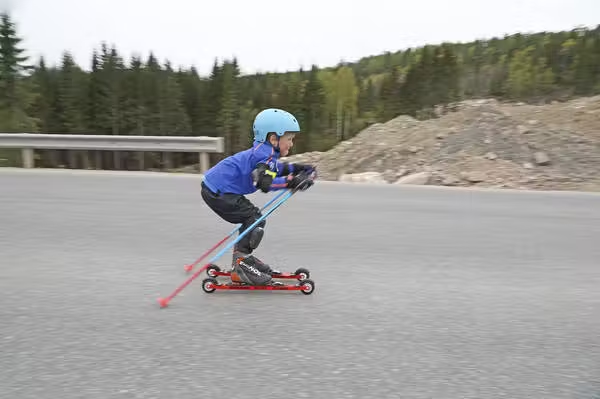
Roller skiing is moderately challenging at first. The technique mimics cross country skiing closely, so it helps to have some skiing experience, but it's not a must. Most beginners need a few sessions to get comfortable with balance, timing, and coordination. The learning curve depends on your fitness level and previous experience with sports like running, skating, or skiing.
Expect a period of adjustment as you build confidence and control. Starting on flat, smooth surfaces makes a big difference. With consistent practice, most people can develop good technique and control in just a few weeks.
Why Is Roller Skiing an Incredibly Effective Workout?
Roller skiing is known as one of the most complete workouts available. It activates your entire body – arms, core, back, and legs – all at once. Because of this, it burns more calories per hour than most other endurance sports. You’re not just moving forward – you’re pushing, gliding, and stabilizing in a full-body rhythm.
In addition to physical benefits, roller skiing also trains mental focus and coordination. It challenges your balance, timing, and technique on every terrain shift. As a bonus, it’s a low-impact activity that’s easier on the joints than running.
Can Roller Skiing Build Muscle?
Roller skiing strengthens your legs, glutes, and hips through repeated push-offs and gliding phases. The arms, shoulders, and back are also engaged during poling. Over time, this consistent movement leads to visible muscle tone and better muscle endurance.
While it won’t bulk you up like weightlifting, it does develop lean muscle mass, especially in the core and lower body. Adding resistance workouts to your rollerski training plan can boost this effect further.
Rollerski Tips for Beginners
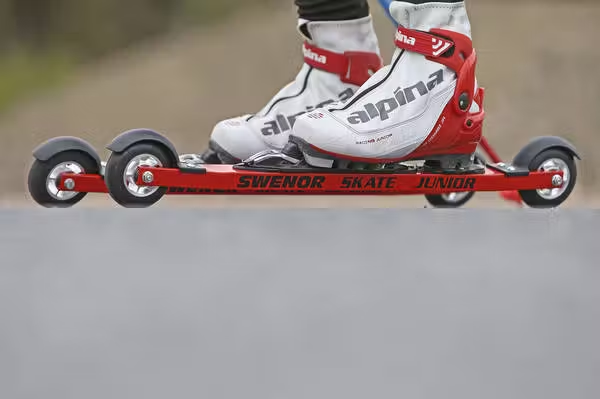
If you’re just getting started, here are a few key tips to stay safe and make faster progress:
- Wear protective gear: Helmet, gloves, and knee pads are essential
- Start on smooth, flat roads or bike paths with low traffic
- Focus on balance and glide before adding speed
- Use your poles to stay stable, not just to push forward
- Work on coordination through short, controlled sessions
- Don’t skip warm-up and cooldown phases
How to Brake on Roller Skis
Braking is one of the most important skills to master early on. Roller skis don’t have built-in brakes, so stopping safely takes practice. Practice your braking technique on a flat and smooth surface with no traffic before you start rolling seriously.
Here are the most common methods for stopping or slowing down on roller skis:
Snowplow Brake (Classic Technique)
Push the heels outwards, so that the skis form a “V”, and let the inside edges of the wheels create friction. This slows you down on gentle slopes.
Dragging a Pole
Use one pole to gently touch the ground behind you while keeping your arm relaxed. This creates drag and slows your momentum.
Dragging a Ski
Similar to braking on inline skates, you can drag one ski behind you, positioned perpendicular to your other ski. It can be a bit challenging – especially with longer skis – so it’s not recommended for beginners. However, once you get the hang of it, it’s a very effective way to brake.
Classic Cross Country Technique on Roller Skis
The classic technique has a lot in common with walking or running. You glide on one ski while the opposite arm and pole push off. Timing and rhythm are key.
- Stay tall and relaxed in your upper body
- Shift your weight fully onto each ski
- Use your arms to drive the poles straight back
- Keep your kick short and snappy
This technique works well on flat to moderate terrain and is ideal for building endurance and coordination.
Skating Technique on Roller Skis
The skating technique is faster and more dynamic. It involves pushing off to the side in a V-pattern, similar to ice skating. This technique requires stronger leg push and a solid core.
- Focus on powerful side-to-side movements
- Use double poling for added speed and control
- Keep your core engaged for better balance
- Practice timing to maintain momentum on climbs
Skating offers a high-intensity workout and is popular with more advanced users, but beginners can also learn