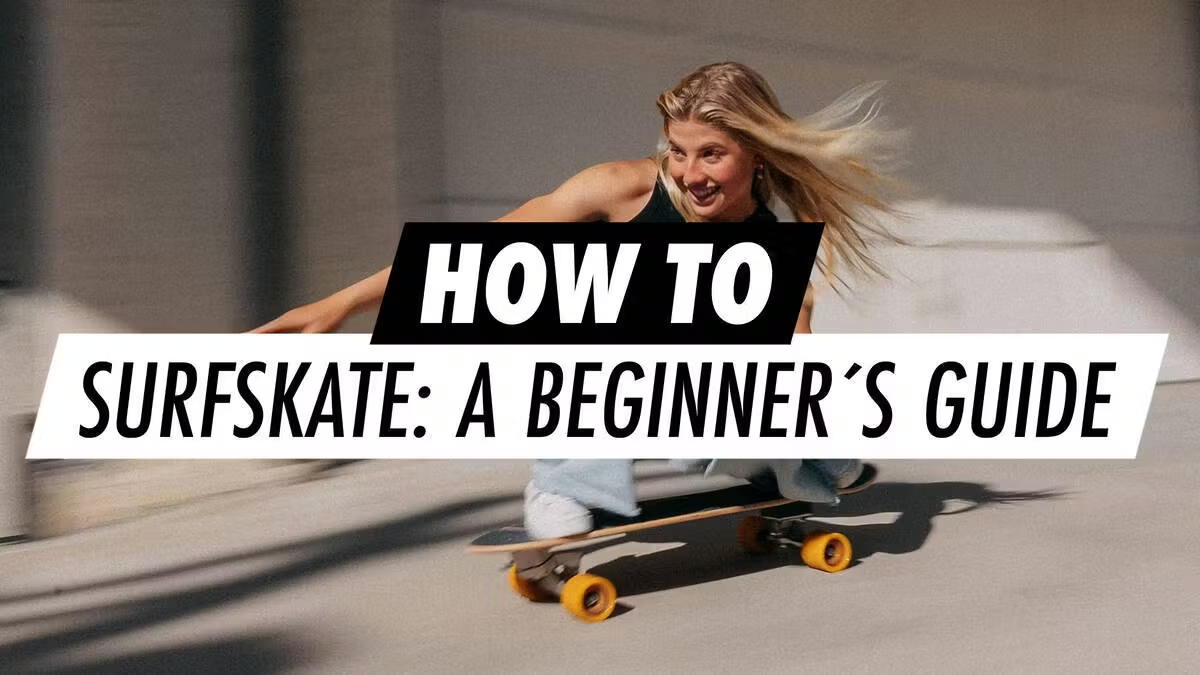
If you have never stepped onto a surfskate before, this guide is the perfect introduction to the basics. You will learn how to shift your weight to create forward momentum without pushing as you would on a skateboard. You will learn how to link smooth turns, and how to position your body for control. These same movements translate directly to surfing techniques such as “bottom turns” or “cutbacks”.
Surfskating is a land-based way to practice the fluid turns, body control, and balance that we know from surfing. It uses a special surf skateboard with a front truck designed to pivot in a way that is completely unlike a regular skateboard truck. If you live far from the ocean or if the water is still, surfskating lets you train your surf skills, strengthen your legs, and fine-tune your timing.
Overview

Start Surfskating: Stance and Balance
Surfskate trucks respond to even the smallest shifts in foot-position, and they feel very different from regular skateboard or longboard trucks. Instead of pushing repeatedly with your foot, you just give one single push to start moving. From that moment on, all forward motion comes from the surfskate pumping technique.
Your stance is the foundation of all movements in surfskating. Place your front foot just behind the front truck bolts, pointing slightly forward. Set your back foot over the rear truck with your toes angled more to the side. Keep your knees bent, shoulders relaxed, and eyes looking in the direction you want to go. A low, balanced position allows you to respond quickly to changes in direction.
Learning to Pump for Speed on a Surfskate
Unlike traditional skateboarding, you do not need to push with your foot to gain speed. Instead, you create momentum by shifting your weight from heel to toe in a smooth rhythm.
The “pumping” motion of surfskating involves:
- Pressing through your toes and leaning your upper body into the turn.
- Rotating your shoulders and hips in sync with the board.
- Extending your legs as you exit the turn to generate forward drive.
Imagine drawing an S-shape on the ground. Each curve is a chance to build speed and prepare for the next maneuver.
Bottom & Top Turns
Bottom and Top Turns are key elements in surfing, and a surfskate offers a unique way to practice them.
The Bottom Turn happens at the base of the wave. It redirects the surfer back toward the highest point of the wave (aka. "The Lip"). The Top Turn takes place near the lip, sending the surfer down the wave again.
Linking these two turns in a smooth sequence is the foundation of fluid surfing. They repeat over and over during a wave and are essential for surfing.
Roll forward, bend into your knees, and carve a deep turn to one side (Bottom Turn). Then rise into the next curve in the opposite direction (Top Turn). Linking these two turns creates a flowing path that feels very close to gliding along a real wave.
Stopping Tips for Surfskating
In surfskating, you need to develop stopping techniques that are adapted to the surfskate’s unique front truck system. If you are used to dragging a shoe along the ground on a regular skateboard, you might be surpised at how the surfskate trucks react.
In short, the high agility of surfskate trucks makes carving and sharp turns effortless, but it also requires a different approach to slowing down.
Fortunately, stopping on a surfskate is simple. Here are three safe and effective ways to bring your board to a halt:
- Step Off Into a Run - When rolling at a low to moderate speed, step off with your back foot first and jog forward to absorb your momentum. Always look ahead and choose a clear landing spot.
- Grass or Rough Surface Stop - If available, guide your surfskate onto grass or a rougher patch of ground. The increased friction will slow you down quickly without stressing the trucks or wheels.
- Carve to Reduce Speed - Make a series of wide, controlled turns to gradually slow down. This method works best when you have space around you, and it won't help you in a situation where you need to stop instantly.
By practicing these techniques, you will gain confidence and stay in control of your surfskate at all times. Mastering stopping early in your surfskate journey will give you the freedom to practice turns, pumping, and other maneuvers without worrying about how to slow down.