Skateboard bushings – sometimes called truck rubber or cushioning – play an important role for your skateboard. The hardness and shape of your bushings directly affect how your board turns, responds, and feels under your feet.
- Harder bushings give increased stability and possibly a more snappy response.
- Softer bushings make it easier to turn and steer the skateboard with less effort.
Overview

What Are Skateboard Bushings?
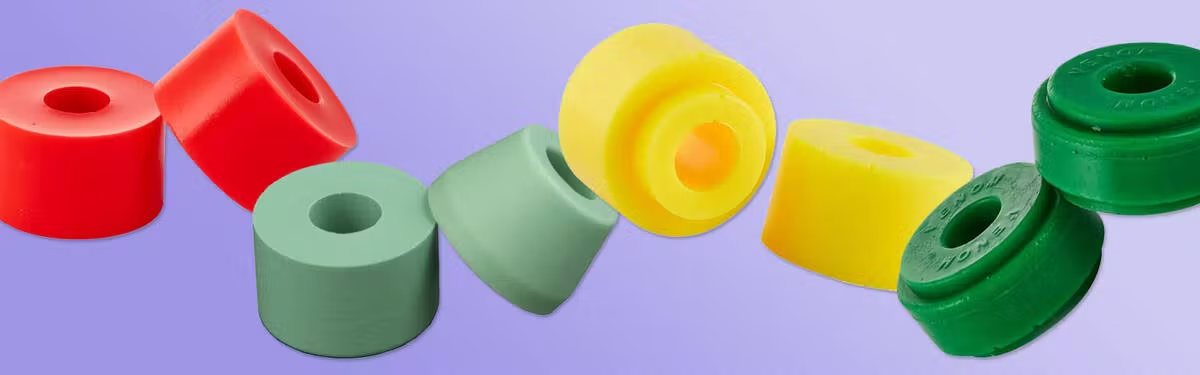
Skateboard bushings are the cylindrically or conically shaped urethane rubbers that sit on the kingpin of the trucks. They enable you to steer and control the skateboard, so their impact on the overall characteristics of your skateboard is significant.
There are two bushings per skateboard truck:
- Top bushing – faces down towards the ground.
- Bottom bushing – faces up towards the deck.
The shape of the bushings conforms to your movements when you put weight on one or the other side of the deck. This causes the trucks to pivot, in effect altering the direction in which you are moving. The amount - or degree - of pivoting determines how sharp your turns will be. The amount of force required to make the trucks pivot is strongly influenced by how easily the bushings conform to your movements.
→ The firmness or hardness of your bushings define the balance between agility, responsiveness, and stability.
How Bushing Hardness Affects Your Skateboard
- Softer bushings make the trucks looser and easier to turn.
- Harder bushings resist pressure more efficiently, making the trucks tighter and more stable.
You Might Need Harder Bushings If...
... your board feels too loose:
If you experience speed wobbles or generally feel that your trucks are too loose, and you need more stability, harder bushings will deliver what you need.
... you experience wheelbite:
Harder bushings can reduce the risk of wheelbites. Make sure to check your truck tightness first and consider whether risers might help.
... you have cranked the kingpin nut to its maximum:
If you can see the threading on the kingpin coming out of the nut or if your bushings look deformed where the washer presses down, consider harder bushings. Hint: If you’re lucky enough to have some washers in the right size lying around, you can put one or two of those under the truck bushing washer, to minimize the amount of exposed threading.
You Might Need Softer Bushings If...
... you find that steering and initiating turns is a struggle:
With softer bushings, turning will require less of an effort.
... you prefer carving and cruising:
Softer bushings makes it easier to take sharper corners, to carve more.
... Loose and fluid is your vibe:
If you love a board that turns easily and responds to every subtle shift, softer bushings provide that flowing, responsive control.
There are many reasons to prefer looser trucks, and some skateboarders even remove the top bushings to achieve ultra (rattly) high flexibility (to be sure: we don’t recommend it).
Bushing Hardness and Body Weight
Your weight affects how your bushings respond to your movements: a heavier person can apply more pressure on the bushings with less effort, while a lighter person will need softer bushings to achieve the same level of responsiveness.
We have put together a table that suggests bushing hardness based on user weight. Keep in mind that body weight is only one factor and does not reflect individual preferences. This chart is simply a starting point for anyone who needs general guidance when beginning to experiment with different bushing hardnesses.
→ Your best reference is your current bushings. If you know the durometer rating of your bushings, you can move up the scale for a harder feel or down the scale for a softer feel.
| User Weight (kg) | Rider Weight (lbs) | Softer / Looser Setup (Durometer) | Stiffer / Tighter Setup (Durometer) |
| <65 kg | <143 lbs | 81A - 85A | 86A - 90A |
| 65 - 80 kg | 143 - 176 lbs | 86A - 90A | 91A - 95A |
| 80 - 90 kg | 176 - 198 lbs | 91A - 95A | 96A - 100A |
| >90 kg | >198 lbs | 96A - 100A | 100A |
Complete skateboards built for kids carry a balanced bushing setup that matches a child’s weight and movement. New trucks also arrive with bushings tuned for most skaters, and wider trucks often run slightly harder bushings than narrower trucks.
→ Focus on skateboard width and truck width when picking up a new complete skateboard or new trucks with pre-installed bushings - they will most likely work for you.
Bushing Shapes and Performance
Bushings come in different shapes, and their shape influences how the truck behaves.
- Conical (shaped like a cone): typically a top bushing, delivering responsiveness.
- Barrel shaped (straight): typically a bottom bushing, providing stability.
Mixing cone and barrel shaped bushings in the manner described above is standard. A cone on top with a barrel on the bottom creates balance. Double barrels add stability, while reversing the setup shifts responsiveness.
Adjust the Kingpin Nut to Fine-Tune the Tightness of Your Trucks
- Tighten the kingpin nut (clockwise) to make trucks firmer and less agile.
- Loosen the kingpin nut (counterclockwise) to make turning easier.
If you struggle to start turns and catch yourself lifting the front wheels to steer, try loosening the trucks. If the trucks feel too loose and you have trouble staying in control, tighten them slightly.
How to Tell if Your Bushings Need Replacing
Check your bushings for cracks, splits, or stickiness, as these indicate wear and reduced performance. Replace worn bushings instead of tightening your trucks to compensate.
If your bushings still work well and you like how your skateboard responds, there is no need to replace them. However, the signs of wear mentioned above mean you will eventually need to take action. If the time has come for new bushings, find what you need here: